You've planned the build. You know roughly where the cabin, the van conversion or the allotment loo is going, and you've worked out that a urine separator is the part that makes a compost toilet actually work — keeping the liquid apart from the solids so the whole thing stays dry, light and very nearly odour-free. Then you find a separator you like on a UK site, get as far as the basket, and a small worry stops you: I'm in Ireland. What happens at the other end? Will I get a surprise bill at the door?
It's a fair question, and it's the single most common reason Irish customers tell us they hesitate. So rather than dress it up, here's a plain look at what ordering a urine separator from Ireland actually involves — plus a bit on planning, and on building the thing once it lands.
Will it actually reach me? Shipping to Ireland
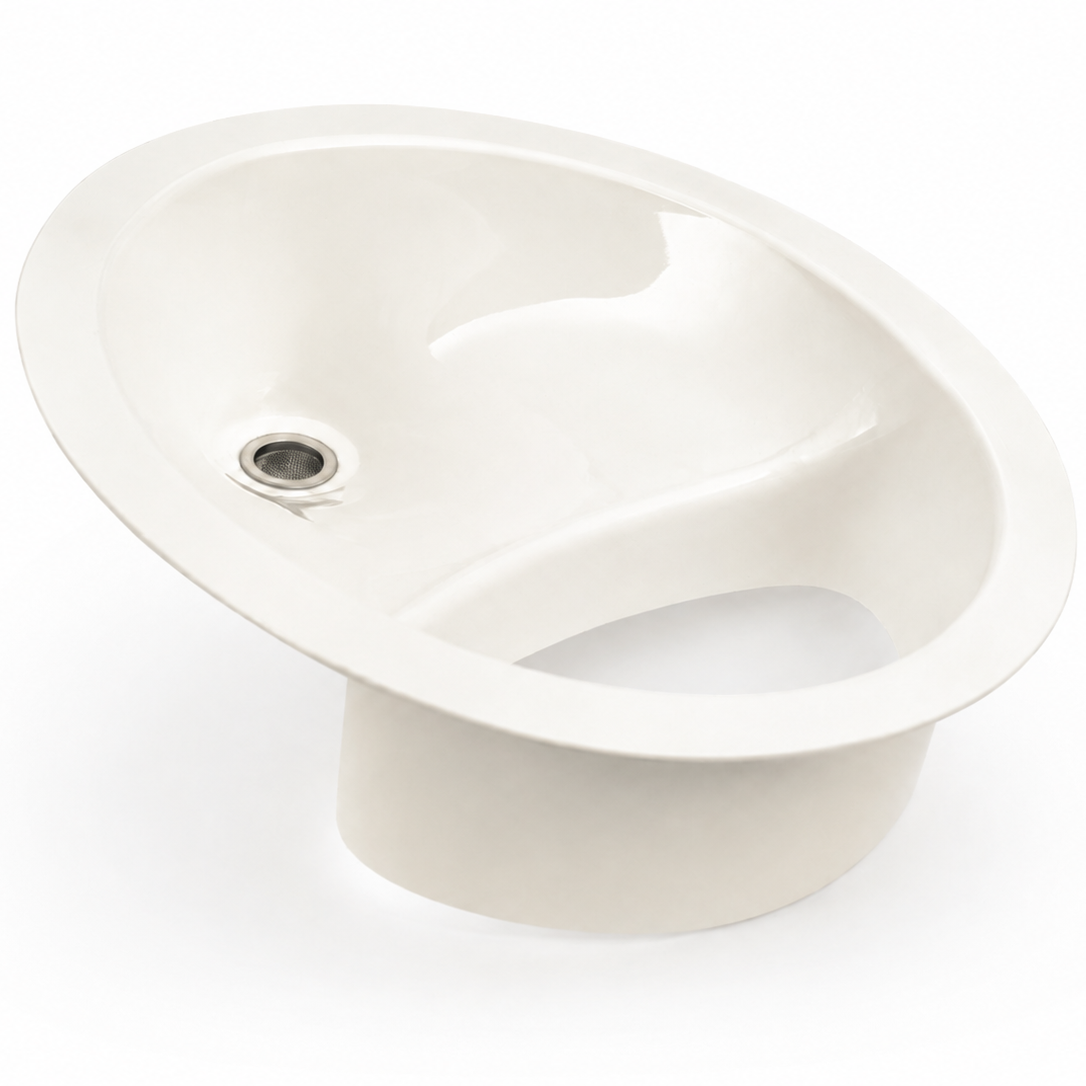
First, the reassuring part: a urine separator is about the most postable component in the whole compost-toilet world. It's a single moulded piece of 4mm ABS plastic — light, and tough enough to take a knock in transit. We make ours by hand here in Mid Wales and we've sent them all over: across the UK, into France, Slovakia, as far as Canada. Ireland is a short hop by comparison.
Since Brexit, a parcel travelling from Great Britain to Ireland counts as an international shipment rather than an internal EU one. In practice that means a customs declaration travels with it, and Irish import rules — VAT, and occasionally duty — can apply on arrival. None of that makes delivery impossible. It just means there are two sensible routes, and it's worth knowing which suits you.
The simplest, no-surprises route. For customers in Ireland and most of the EU, we usually point you to our Amazon and eBay shops. The reason is honesty, not sales: on those marketplaces any import costs are worked out and shown up front at checkout, so the price you pay is the price you pay — nothing unexpected lands at your door later. If certainty matters to you, and for a self-builder on a budget it usually does, that's the easy option.
Ordering direct from us. You can also buy straight from our website and we'll dispatch from the UK, typically within 5–10 days. Going this way, Irish VAT (and occasionally a small duty) may be collected by the carrier or An Post on arrival — usually a modest amount on a single separator, but we won't pretend it's always nil. Our international postage page lays out the current options, and you're welcome to email us before you order for a clear answer for your part of Ireland.
Compost toilets and the Irish context

Ireland has a real and growing off-grid scene — tiny houses, rural self-builds, allotment plots, vanlife conversions and eco-renovations of old cottages well beyond the reach of mains sewerage. If you're somewhere without a connection to the public system, a composting toilet is often the most sensible answer going: no water, no septic tank, no soakaway.
On planning, we'll tread carefully here, because we make toilets, not Irish planning law. As a rule of thumb, a dry composting toilet in Ireland generally doesn't need a connection to mains drainage — that's rather the point of it. But whether a particular structure needs planning permission depends on what you're building, where, and how it's used, and your local authority is the final word. If your project is anything more than a simple garden loo, it's worth an informal chat with your local planning office, and it's sensible to check current EPA guidance on wastewater before you commit. None of that should put you off; it's the same homework any Irish self-builder does as a matter of course.
Building it: using the Compass urine separator in your own compost loo

Here's the satisfying part. The separator does the clever bit; the box around it is well within reach of any reasonably handy person. Most Irish self-builders we talk to are building into a timber box, a van bench or an old cubicle, and the approach is the same in each case.
Sizing and the seat. Our separator sits beneath a standard toilet seat. Build a sturdy box at a comfortable sitting height — around 400 to 450mm to the top of the seat suits most people — and cut an aperture so the separator drops neatly into place. Check the dimensions on the product page against your build and cut a paper template first; it saves a lot of head-scratching later.
The two streams. Liquid runs from the front channel down a length of hose to a sealed container — a jerry can or a 5- to 10-litre bottle that's easy to lift out and empty. The solids drop into a bin beneath: a wheelie bin works brilliantly for a fixed build, while a van or small cabin might use a simple lidded bucket. After each use you add a scoop of soak — sawdust, wood shavings or coir all work — to cover things and keep it sweet.
Ventilation. This is the detail people skip and then regret. A small vent pipe running up and out of the cabin, ideally with a low-wattage computer fan drawing air through, keeps the whole thing dry and genuinely odour-free. It's cheap, and it's the difference between a loo you're happy to have indoors and one you're not.
Materials you can source locally. Almost everything else comes off the shelf at any Irish builders' merchant: marine ply or treated timber for the box, flexible hose, a container for the liquid, a bin for the solids, and a bit of vent pipe. The separator is the one specialist part — and it's the part we make.
Ready when you are
If you've got this far, you're most of the way to a working compost loo. You can view the Complete Urine Separator here — the most popular component we sell and the one most Irish self-builders choose. And if there's anything you want to nail down first — the best route to Ireland, which separator suits your build, or how it'll fit your van — just drop us a line. We'd rather answer your question now than have you guess.
Frequently asked questions
Do I need planning permission for a compost toilet in Ireland?
It depends on what you're building, where it goes and how it's used — a small garden loo and a permanent dwelling's facilities are very different cases. As a rule of thumb a dry composting toilet doesn't need a mains connection, but your local planning authority is the final word. For anything beyond a modest structure, have a word with them and check current EPA guidance first.
Will I get a customs or VAT bill when it arrives in Ireland?
If you buy through our Amazon or eBay shops, any import costs are calculated and shown at checkout, so there's nothing extra at the door. If you order direct from our website, Irish VAT and occasionally a small duty may be collected by the carrier or An Post on arrival — usually modest on a single separator. Email us for a clear figure before you order.
Where do I empty the urine container?
Diluted well with water (around 8 to 10 parts to one), it's an excellent nitrogen feed for trees, shrubs and compost heaps — never neat, and never on plants you'll eat raw. If you'd rather not use it, it can go down a regular drain. Plenty of allotment and homestead users put it to work on the ground; it's a resource, not a waste.
How often will I need to empty things?
The liquid container fills fastest — for a couple in regular use, expect to empty a 5-litre bottle every few days, or fit a larger tank. The solids bin lasts far longer: weeks to months for typical home or cabin use, depending on bin size and how busy the loo is.
Which separator should I choose for a van or tiny build?
The Complete Urine Separator suits most fixed and mobile builds and is our most popular. If you're very tight on space — a compact van bench, say — our smaller Compact separator may fit better. If you're unsure, send us your seat dimensions and we'll point you to the right one.