If you're planning an off-grid cabin in Connemara, doing up a tiny house on a site in Leitrim, or just want a proper loo at the bottom of a rural garden that isn't on the mains, building your own compost toilet is one of the most satisfying weekend projects you can take on. The clever part — the bit that makes the whole thing work without smell or fuss — is a small piece of moulded plastic called a urine separator. Get that right, and the rest is joinery you can manage with basic tools.
We've been making composting toilets in our workshop in Mid Wales for 25 years, and we ship the separators all over the world. This is a plain-English guide to building your own compost loo in Ireland around our Compass urine separator: how it works, how to size and ventilate the build, what materials you can pick up from your local Irish merchant, and the practical bits about planning and shipping that Irish self-builders tend to ask us about.
Why build your own compost toilet in Ireland?
A lot of rural Ireland simply isn't on mains drainage. If you're off-grid, on a smallholding, or developing a site where a septic tank is overkill (or not yet in), a compost toilet solves the problem cleanly and cheaply. There's a growing Irish off-grid, tiny-house and homestead scene, and a well-built dry toilet fits it perfectly — no water, no chemicals, no cassette to cart to a disposal point.
The reason a modern compost loo doesn't smell is simple: it keeps liquids and solids apart. Mixed together, urine and solid waste turn anaerobic and start to pong within a day. Kept separate, the solids stay relatively dry, break down slowly with a handful of sawdust or coir after each use, and the smell more or less disappears. That separation is the whole job of the urine separator.
The heart of the build: the Compass urine separator

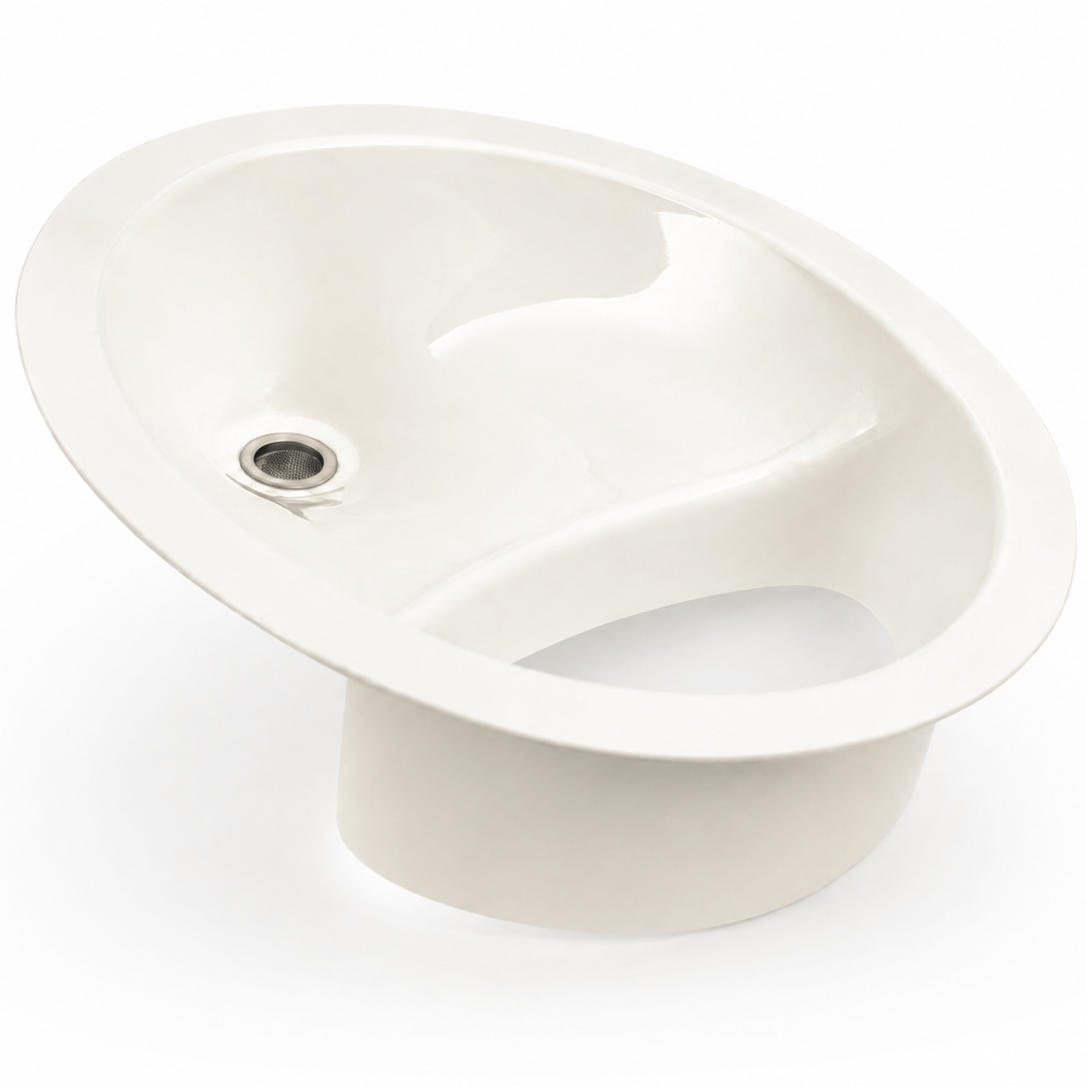
The separator sits under the toilet seat and diverts urine forwards into a container or soakaway while solids drop straight down into a bin below. We make two versions, and which one suits your Irish build depends on how you're using it:
The Complete separator fills the entire oval of a standard seat opening, with the solids chute set to the rear. It contains everything neatly and keeps the toilet cleaner — the better choice for a permanent cabin, homestead or holiday-let loo that gets regular use. The Compact separator is smaller and square, sitting across the front third of the opening, which lets you position it to suit narrower or home-built seats — handy for a tiny house, campervan or a tight allotment shed. Both are moulded from solid 4mm ABS, come in white or black, and take a standard 30–32mm (1¼") pipe from the spout.
Building it: sizing, ventilation and materials

The box and the seat
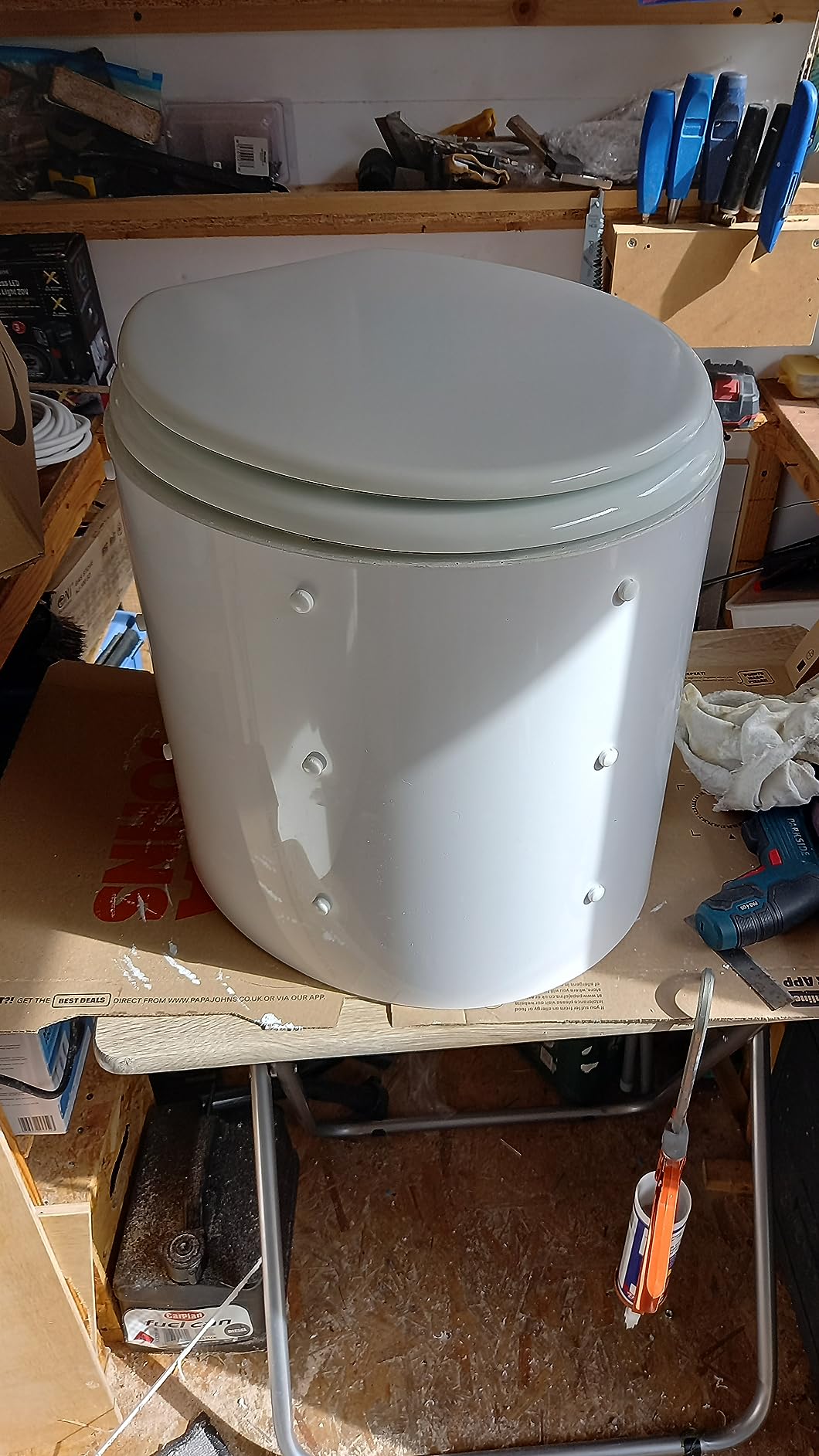
Most home builds are a simple plywood or timber box — a plinth — with a standard toilet seat on top and the separator fixed underneath the opening. Aim for a comfortable seat height of around 40–45cm. Underneath, you want room for a solids bin (a 20–25 litre bucket with a lid is the usual choice) directly below the chute, and a container for the urine (a 5–10 litre jerrycan works well) sitting in front, plumbed to the spout with a short length of 32mm waste pipe. Keep the pipe run short and downhill so nothing sits in the line.
Ventilation
The single upgrade that separates a good compost loo from a merely tolerable one is a vent pipe. Run a 50–110mm pipe from inside the box up through the roof, and if you can, fit a small low-wattage 12V computer fan or a solar-powered extractor at the top. It pulls a gentle current of air down through the seat and up the stack, which keeps the solids drying and moves any odour up and away rather than into the room. In an Irish climate — damp, mild, plenty of soft rain — that airflow does a lot of the drying work for you.
Materials you can source locally
Almost everything except the separator itself is available from any Irish builders' merchant or hardware shop. Marine or WBP plywood for the box, standard 32mm and 50mm waste pipe and fittings, a toilet seat, a lidded bucket, and a bag of kiln-dried sawdust, coir or wood shavings as your cover material. Coir bricks from a garden centre are cheap, compact and store well. The separator is the one specialist part, and that's the bit we make and post to you.
A word on planning and the EPA
People often ask whether they need planning permission for a compost toilet in Ireland. As a rule of thumb, a compost toilet generally doesn't need to be connected to mains sewage, and that's much of its appeal. But planning context in Ireland varies by situation — whether the toilet is part of a larger development, a new dwelling, or a standalone structure all matters, and your local planning authority is the final word. It's worth a quick check with them, and a look at current EPA guidance on wastewater and greywater, before you build something permanent. We're furniture and separator makers rather than planning consultants, so treat this as a nudge to verify locally rather than legal advice.
Getting a Compass separator shipped to Ireland

We know the honest worry for Irish buyers ordering from a UK site is a surprise customs or VAT bill landing on the doorstep. We won't pretend post-Brexit shipping is invisible — it isn't. What we can say is that a urine separator is small and light (well under a couple of kilos), which keeps carriage sensible, and we work to make Irish orders as smooth as we can. For the current position on duties and landed cost, please see our shipping page — and if you'd like a clear, no-surprises answer before you commit, just email us and we'll talk you through exactly what to expect for your order. We'd far rather you asked first than got a shock later.
Ready to start your build?
If you've got a weekend, a sheet of ply and a plan, the Compass separator is the piece that turns a box into a proper, smell-free compost toilet. Have a look at the Complete urine separator for permanent cabins and homesteads, or the Compact version for tiny houses and tighter builds. And if you're at the planning stage and not sure which suits your project, drop us an email before you order — we're happy to help you get it right first time.
Frequently Asked Questions
Do I need planning permission for a compost toilet in Ireland?
As a rule of thumb a compost toilet doesn't need connection to mains sewage, which is much of its appeal, but planning requirements vary depending on your site and what the toilet is part of. Your local planning authority is the final word, and it's worth checking current EPA guidance too before building anything permanent.
Will I get a customs or VAT bill when it's delivered?
Post-Brexit, shipping from the UK to Ireland can involve customs and VAT handling. We can't promise there'll be nothing to pay, so the honest advice is to check our shipping page for current details and email us before you order — we'll give you a clear picture of the landed cost for your order.
Which separator should I choose — Compact or Complete?
The Complete fills the whole seat opening and keeps things neatly contained, ideal for a permanent cabin or homestead loo. The Compact is smaller and adjustable, which suits tiny houses, vans and home-built seats where space is tight.
Where do I empty the urine container?
Diluted roughly ten parts water to one, urine is an excellent nitrogen feed for trees, hedges and non-edible plants — many off-grid households pour it straight onto a soakaway or a dedicated planting area. Keep it away from watercourses and edible crops, and check local guidance if you're unsure.
What size pipe do I need for the build?
The separator spout takes a standard 30–32mm (1¼") waste pipe, all of which you can buy from any Irish builders' merchant. For the vent stack, a 50–110mm pipe up through the roof works well, ideally with a small 12V or solar fan at the top.