Choosing the Right Wood for Outdoor Furniture — Oak, Larch, Douglas Fir and More
Wood is not a uniform material. Two boards sitting side by side in the yard can look almost identical and then behave completely differently once they're outside, facing down a Welsh winter. We've been building outdoor furniture here in Mid Wales for over 25 years, and if there's one thing that decides whether a piece is still standing proud in twenty years or quietly rotting in ten, it's getting the timber right at the very start.
So this isn't a textbook. It's how we actually think about wood in our workshop — which species we reach for, why, and what we'd tell you if you rang us up about a bench for an exposed hillside or a table for a sheltered courtyard.
Why the Species Matters So Much
Outdoors, all timber faces the same three enemies: moisture, UV light, and biological attack from fungi and insects. Different species resist them to wildly different degrees — and it isn't simply about how heavy or dense the wood is. It's about the natural extractives locked into the heartwood.
The pale sapwood on the outside of almost any tree will rot given half a chance. It's the dense, tannin- or resin-rich heartwood at the core that does the hard work of lasting outdoors. Oak's high tannin content makes it naturally resistant to fungal attack; larch's natural oils do the same job. Those properties are baked into the wood itself, finish or no finish — which is exactly why we select for them.
The other thing we're always watching is movement. Timber swells and shrinks as it takes up and releases moisture, and species with tight, stable grain move less. That keeps joints tight and surfaces flat, which matters enormously in joinery-heavy pieces like benches and tables.
Oak: The One We Reach For Most
Oak is the wood most people picture when they think of a proper outdoor bench, and the reputation is thoroughly earned. European oak — Quercus robur, the oak of British woodlands — is exceptionally durable outdoors with no treatment at all. Its tannin sees off both fungal decay and insects, and it actually hardens with age: old oak is genuinely tougher than new.
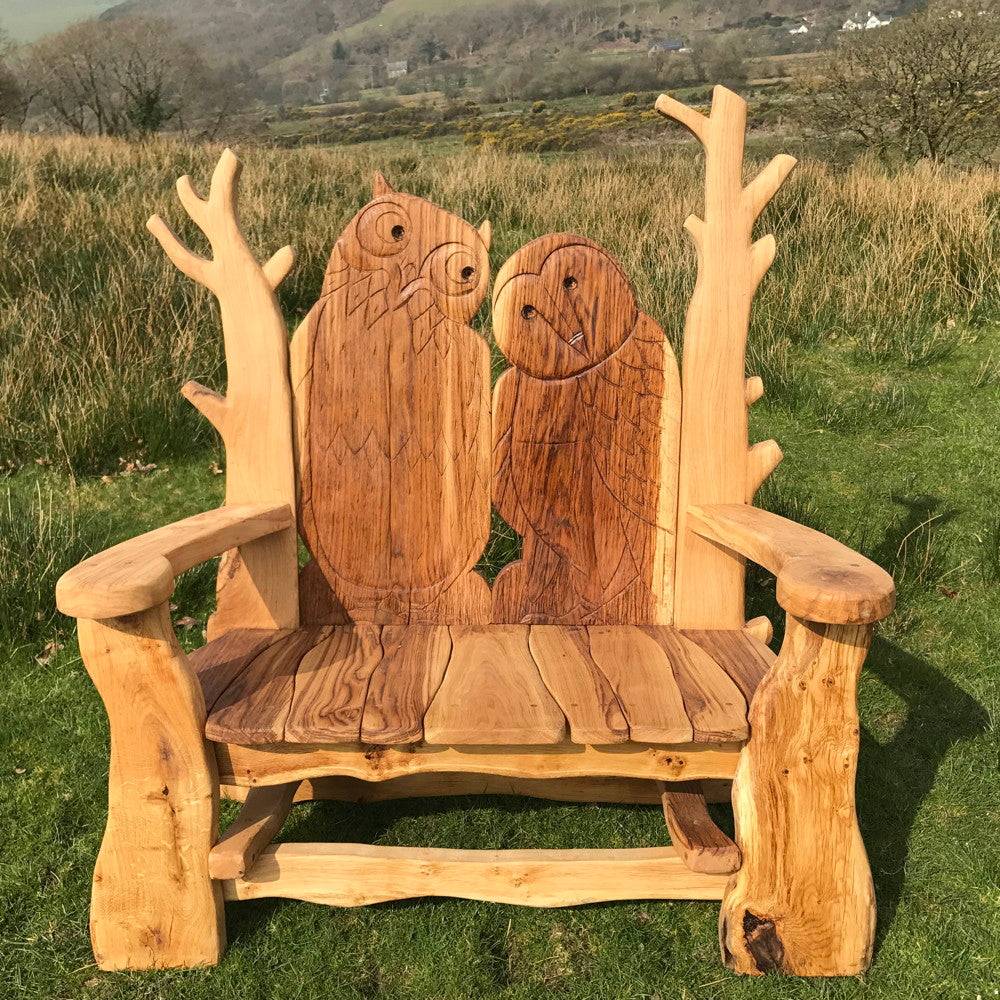
It's the timber behind nearly all our benches. Our Owl Garden Bench is a good example — solid oak, mortise-and-tenon joints throughout, built to take decades of weather. Versions of it are in school grounds up and down the country, and as Andrea at Exeter Cathedral School told us, "the children are enjoying them immensely — all we need now is better weather!" That's the real test of an outdoor timber: it just keeps getting used, season after season.

We're fussy about the oak itself, too. For our Rustic Oak Four Poster Tree Bed we select the posts one by one from timber near the workshop, choosing each for its natural twists, knots and branching — solid heartwood, the part of the tree that lasts. That habit of picking heartwood over sapwood is the same instinct that makes oak such a dependable outdoor timber.
The honest downsides are weight and cost. A solid oak bench is a serious object — it won't blow over in a gale, but you won't shift it around the lawn on a whim either, and oak sits at the pricier end, reflecting its slow growth. One more thing worth knowing: green (freshly milled) oak will check — develop fine surface cracks — as it dries. It's completely normal, it doesn't weaken the piece, and many people love the character. Kiln-dried oak moves less but costs more.
Larch: The Unsung Hero
Larch doesn't get half the credit it deserves. It's a naturally oily softwood that weathers beautifully, is much lighter than oak, and costs considerably less. For cladding, decking and garden structures it often outperforms timbers twice the price.
European and Japanese larch are both grown widely in Britain — plenty of it right here in Wales — so we can often source it locally. The resin in the grain resists decay and gives it a solidity most softwoods lack. Left bare it silvers like oak; oiled, it keeps a warm golden-amber. The grain is straight and well-mannered in joinery. Its one limitation is hardness: larch is softer than oak and will show dents and wear sooner, so for a hard-used seat we'll lean to oak, but for cladding or a sheltered piece it's a brilliant choice.
Douglas Fir: Strong and Structural
Douglas fir isn't native here but grows well in Britain, and it's a cracking structural timber — strong for its weight, clean and straight in the grain, and more durable outdoors than most softwoods. Where it really earns its place is in the bones of a build: frames, legs and posts that need predictable strength.
You can see exactly how we mix species by job in our compost toilet buildings. The Bog Standard's framework is Douglas fir for strength; the cladding is cedar or larch for weather resistance; the base is pressure-treated timber where it meets the ground. Every timber is oversized for extra strength and longevity. No single wood is best at everything — the trick is putting the right one in the right place.

Pine: Not for Outdoors (Without Help)
Scots pine and the other softwood pines are everywhere in construction and indoor furniture, but they are not naturally durable outside. Left untreated, pine starts to decay within a few years of exposure — sooner in a climate as wet as ours.
Pressure-treated (tanalised) pine is a different story: it's fine for structures like decking frames, fence posts and raised-bed sides, which is exactly why we use it for the parts of a build that sit against the ground. But it isn't a furniture timber. If someone's selling you untreated "pine garden furniture" as a premium outdoor product, be sceptical — it'll need constant maintenance or it won't last.
Finishing — and Why We Varnish When Most Guides Say Don't
You'll often read that you should never varnish outdoor furniture, because film finishes crack and peel. With cheap, brittle gloss varnish, that's true. But it's not the whole picture.
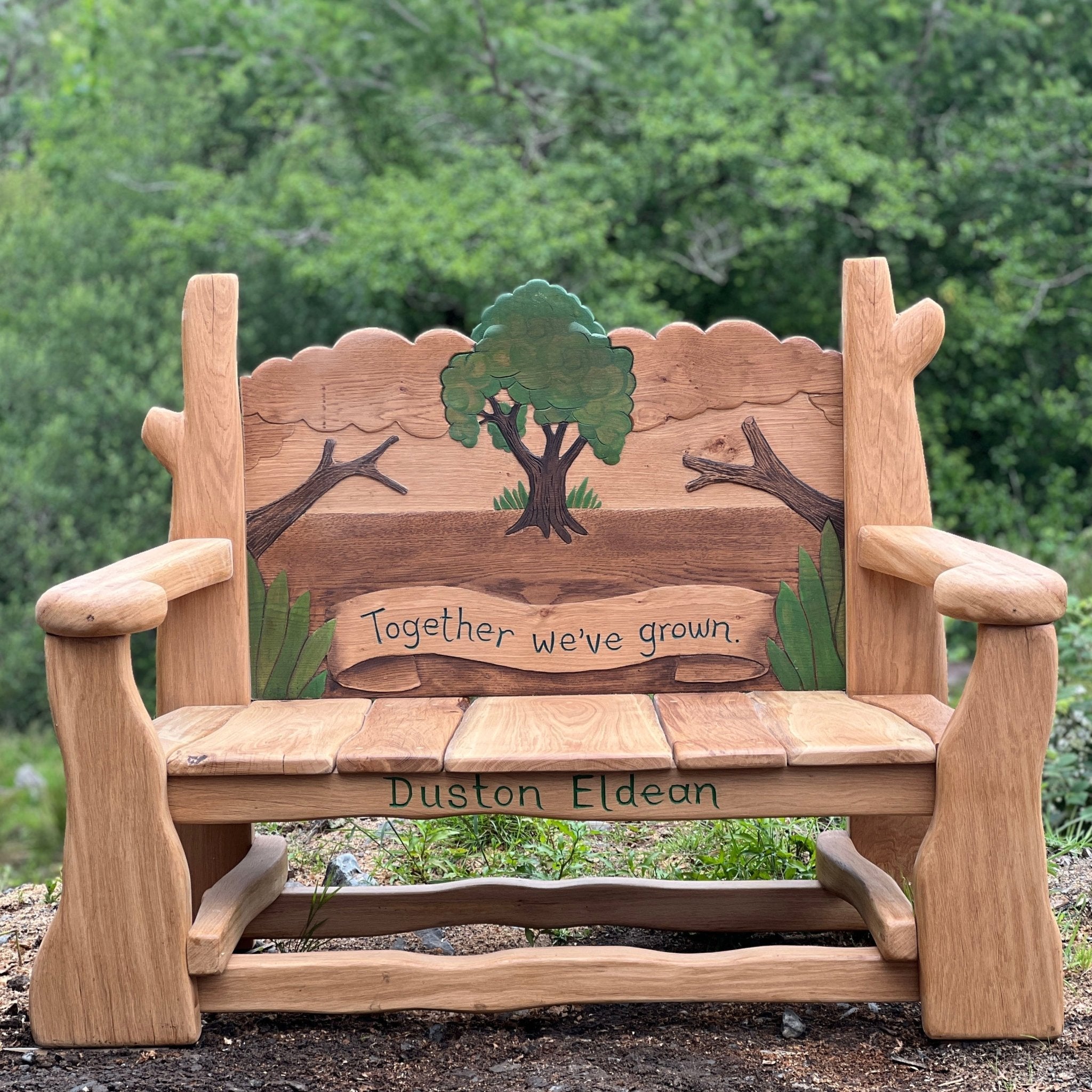
We finish our oak benches with three coats of Epifanes matt varnish — a marine-grade finish built to flex with the timber as it moves through the seasons, rather than sitting rigid on top and flaking off. It protects the carved detail, holds back the weather, and keeps the wood looking like wood. The lesson isn't "never varnish" — it's "use the right varnish."
If you'd rather do nothing at all, that's a perfectly good option for oak and larch: both will silver to a soft grey and stay structurally sound for years untreated. If you want to keep the warm original colour instead, a penetrating oil once a year does it. The one thing we'd steer you away from is a cheap film-forming gloss varnish or paint on a piece that flexes outdoors — that really does crack, and it looks worse than bare weathered wood.
How We Choose Wood at Free Range Designs
Every piece starts with two questions: what's it for, and where's it going to live? A memorial bench for an exposed hillside gets solid oak — it'll outlast everything around it and age beautifully. A structure gets Douglas fir in the frame and larch or cedar on the outside. The bits that meet the ground get treated timber. We match the species to the job rather than forcing one wood to do everything.
And we buy local wherever we can. Welsh and British-grown timber is our default — shorter supply chains, a lighter carbon footprint, and the ability to trace a board back to the woodland it came from. For the four-poster posts, that can mean timber from right beside the workshop.
If you're weighing up a piece and want to talk through species or finish for your particular spot — windy, shady, coastal, whatever it is — we're always happy to. Have a look at our garden benches, memorial benches or outdoor structures, then get in touch. We build each piece to order, and getting the timber right from the very first cut is the most important thing we do.